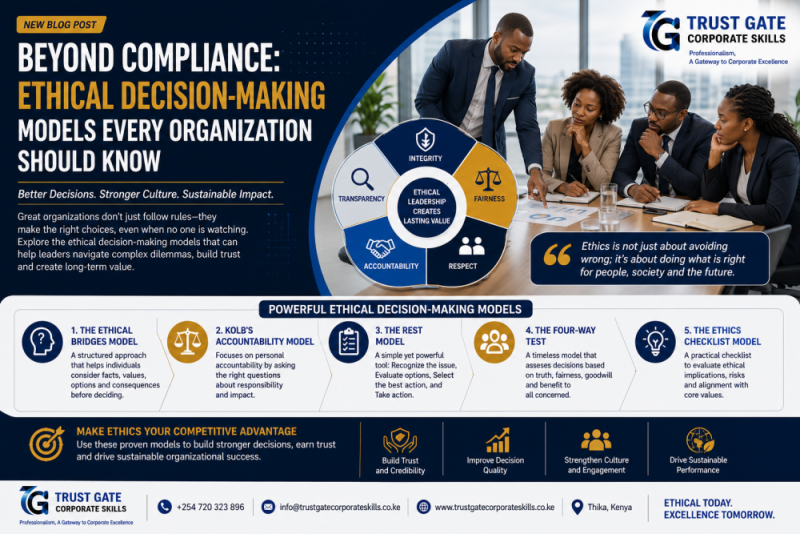
Beyond Compliance: Ethical Decision-Making Models Every Organization Should Know
Ethics Is No Longer Optional—It Is a Business Strategy
Every day, organizational leaders make decisions that influence employees, customers, shareholders, regulators, and society. Some decisions are straightforward, while others involve difficult trade-offs where there is no obvious right or wrong answer. Should a company disclose a mistake that could damage its reputation? Should profitability take precedence over employee welfare? How should artificial intelligence be used without compromising privacy and fairness?
These questions highlight why ethical decision-making has become one of the most valuable leadership competencies in modern organizations.
Ethics is often misunderstood as merely following laws and regulations. In reality, compliance sets the minimum standard, while ethics challenges organizations to do what is right—even when no law requires it. Ethical organizations recognize that trust, integrity, and accountability are strategic assets that contribute directly to sustainable growth and competitive advantage.
Organizations that consistently make ethical decisions enjoy stronger stakeholder confidence, attract top talent, reduce legal and reputational risks, and build brands that endure. Those that ignore ethics may achieve short-term gains but often face long-term consequences.
The question is not whether organizations will face ethical dilemmas—but whether they are prepared to navigate them wisely.
Why Organizations Need Ethical Decision-Making Models
Ethical dilemmas rarely present themselves as simple choices between right and wrong. More often, they involve competing interests, conflicting values, incomplete information, and pressure to deliver results.
Structured ethical decision-making models provide leaders with a systematic approach to evaluating difficult situations. Rather than relying on intuition or personal opinions, these models encourage thoughtful analysis, consistency, fairness, and transparency.
The Five Most Influential Ethical Decision-Making Models
1. The Utilitarian Model
Choose the course of action that creates the greatest overall benefit while minimizing harm. Leaders evaluate consequences for all stakeholders before making decisions.
2. The Rights-Based Model
Respect and protect the fundamental rights and dignity of every individual, including privacy, safety, equality, and confidentiality.
3. The Justice and Fairness Model
Ensure decisions are impartial, equitable, consistent, and free from discrimination or favoritism.
4. The Virtue Ethics Model
Focus on the character of the decision-maker. Ethical leaders demonstrate integrity, honesty, courage, accountability, humility, and respect.
5. The Common Good Model
Consider how decisions contribute to the welfare of society through sustainability, responsible business, and community development.
Building an Ethical Culture
An ethical culture begins with leadership. Organizations should communicate values clearly, encourage employees to speak up without fear, reward ethical behaviour, provide continuous ethics training, and hold everyone accountable regardless of position.
Ethical decision-making is not about choosing between success and integrity—the two go hand in hand. Organizations that embed ethical thinking into everyday decisions strengthen governance, build stakeholder trust, reduce risk, and create sustainable long-term value.
At Trust Gate Corporate Skills, we help organizations develop ethical leaders, strengthen governance systems, and build cultures where integrity drives performance.