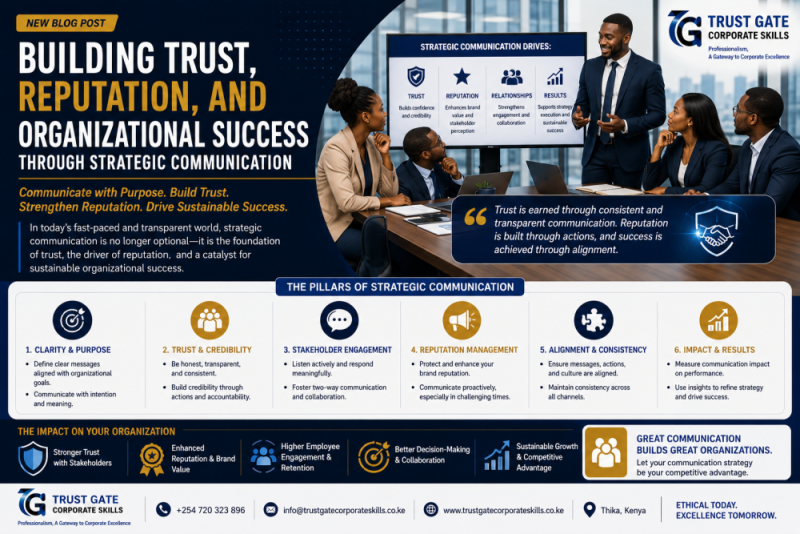
Effective communication is no longer a support function—it is a strategic leadership responsibility. Organizations operate in an era where information travels instantly, stakeholder expectations continue to rise, and reputations can be strengthened or damaged within minutes. Whether in government institutions, corporations, NGOs, financial institutions, or development agencies, strategic corporate communication and public relations have become essential tools for organizational success. Organizations that communicate effectively are better positioned to build stakeholder confidence, manage change, attract investment, strengthen customer loyalty, and protect their reputation during periods of uncertainty. Conversely, poor communication can result in misinformation, stakeholder mistrust, reputational damage, and operational challenges.
Why Strategic Communication Matters
Corporate communication serves as the bridge between an organization and its stakeholders. It ensures that key messages are delivered consistently, accurately, and professionally across all communication channels. Strategic communication aligns communication efforts with organizational goals, helping institutions achieve greater visibility, credibility, and influence. Effective communication enables organizations to:
ü Strengthen stakeholder relationships and trust.
ü Enhance corporate reputation and brand image.
ü Improve employee engagement and organizational culture.
ü Support change management and transformation initiatives.
ü Manage crises and protect institutional credibility.
ü Promote transparency and accountability. Increase public awareness and stakeholder confidence.
As digital platforms continue to reshape how information is consumed and shared, organizations must adopt proactive communication strategies that engage audiences across multiple channels while maintaining message consistency.
The Growing Importance of Public Relations
Public relations has evolved far beyond media relations and publicity. Modern PR professionals play a strategic role in shaping organizational narratives, managing stakeholder perceptions, and supporting executive leadership.
Successful public relations strategies help organizations:
ü Build positive relationships with media and key stakeholders.
ü Position leaders as trusted voices within their sectors.
ü Enhance organizational visibility and thought leadership.
ü Monitor and manage public perception.
ü Respond effectively to emerging issues and reputational threats.
ü Support advocacy, policy, and development initiatives.
Organizations that invest in professional public relations are often better equipped to navigate complex stakeholder environments and maintain public confidence.
Managing Reputation in the Digital Age
Reputation has become one of the most valuable organizational assets. Stakeholders increasingly make decisions based on trust, transparency, and perceived organizational integrity. Social media platforms, online news outlets, and digital communication channels have amplified both opportunities and risks. A single communication mistake can quickly become a public relations crisis, while effective communication can strengthen stakeholder trust and loyalty. To protect and enhance reputation, organizations must:
ü Establish clear communication policies and protocols.
ü Monitor traditional and digital media continuously.
ü Respond promptly and professionally to stakeholder concerns.
ü Maintain consistency across all communication channels.
ü Communicate transparently during crises and periods of uncertainty.
Organizations that proactively manage their reputation are more resilient, competitive, and trusted by stakeholders.
Crisis Communication: Preparing for the Unexpected
No organization is immune to crises. Operational disruptions, cyber incidents, governance challenges, workplace accidents, regulatory investigations, and public controversies can occur at any time. The difference between organizations that recover quickly and those that suffer long-term reputational damage often lies in the effectiveness of their crisis communication strategies. A strong crisis communication framework includes:
ü Crisis communication policies and response plans.
ü Clearly defined communication roles and responsibilities.
ü Media response protocols.
ü Stakeholder notification procedures.
ü Executive spokesperson preparation.
ü Social media response strategies.
ü Post-crisis evaluation and learning mechanisms.
Prepared organizations can respond confidently, maintain stakeholder trust, and minimize reputational damage during challenging situations.
Internal Communication: The Foundation of Organizational Success
While external communication often receives significant attention, internal communication is equally important. Employees are among an organization's most important stakeholders and ambassadors. Effective internal communication helps organizations:
ü Improve employee engagement and morale.
ü Strengthen organizational culture.
ü Support strategic change initiatives.
ü Increase productivity and collaboration.
ü Reduce misinformation and uncertainty.
ü Enhance leadership credibility.
Organizations with strong internal communication systems are better able to align employees with strategic objectives and create a shared sense of purpose.
Developing Strategic Communication Leadership
Communication is increasingly becoming a core leadership competency. Senior executives, managers, communication professionals, and public relations practitioners must possess the skills required to communicate effectively with diverse stakeholders. Strategic communication leaders understand the following:
- Aligning communication with organizational strategy.
- Managing stakeholder expectations.
- Influencing public perception.
- Leading communication during crises.
- Building trusted relationships with media and communities.
- Leveraging digital communication platforms effectively.
As organizations face increasingly complex communication environments, investing in communication leadership development is no longer optional—it is essential.
Strengthen Your Communication Strategy with Trust Gate Corporate Skills
Strategic corporate communication and public relations are fundamental to organizational success in the modern era. Institutions that communicate with clarity, transparency, and purpose are better positioned to build trust, manage challenges, and achieve their strategic objectives. By investing in communication excellence, organizations can strengthen stakeholder relationships, protect their reputation, and create lasting value for the communities they serve.
Ready to strengthen your organization's communication strategy? Contact Trust Gate Corporate Skills today and discover how our Strategic Corporate Communication and Public Relations Training Course can help your institution build trust, enhance reputation, and achieve sustainable success.