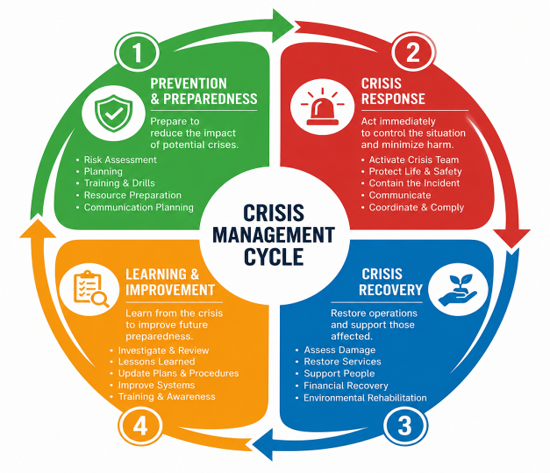
What is Crisis Management?
Crisis management is the structured process of preparing for, responding to, recovering from, and learning after an unexpected event that threatens an organization's operations or stakeholders. It combines strategic leadership, risk management, communication, and operational coordination to minimize disruption and ensure business continuity.
The Four Stages of the Crisis Management Cycle
1. Prevention and Preparedness
Organizations identify potential risks, conduct risk assessments, develop crisis response plans, train employees, and establish business continuity strategies before a crisis occurs.
2. Crisis Response
When a crisis strikes, leadership must act quickly by activating crisis management teams, protecting lives and assets, communicating with stakeholders, and ensuring compliance with legal and regulatory requirements.
3. Crisis Recovery
The focus shifts to restoring normal operations, supporting affected employees and customers, repairing damage, and rebuilding stakeholder confidence.
4. Learning and Continuous Improvement
Every crisis provides valuable lessons. Organizations should review their response, identify gaps, update policies, strengthen governance systems, and improve future preparedness.
Why Governance Matters During a Crisis
Strong governance provides the leadership, accountability, and oversight needed to make timely, ethical, and informed decisions during periods of uncertainty. Boards and senior executives play a critical role in ensuring transparency, compliance, effective communication, and responsible resource allocation throughout the crisis lifecycle.
Organizations with effective governance frameworks recover faster, protect their reputation, and maintain stakeholder confidence.
Best Practices for Crisis Management
Successful organizations consistently:
- Develop comprehensive crisis management and business continuity plans.
- Conduct regular emergency simulations and crisis exercises.
- Strengthen enterprise risk management and internal controls.
- Establish clear communication protocols.
- Promote ethical leadership and accountability.
- Review and improve crisis response plans after every incident.
Preparing for the Future
Emerging risks such as cybersecurity threats, climate change, geopolitical instability, and supply chain disruptions require organizations to become more resilient than ever before. Crisis management is no longer just an operational responsibility—it is a strategic leadership function that should be embedded within an organization's governance framework.
How Trust Gate Corporate Skills Can Help
Trust Gate Corporate Skills delivers practical, internationally aligned training in Crisis Management, Enterprise Risk Management, Corporate Governance, Business Continuity Planning, Leadership, Compliance, and Organizational Resilience.
Our programmes equip executives, managers, boards, and professionals with the knowledge and tools to anticipate risks, respond effectively to crises, and build resilient organizations capable of thriving in an increasingly uncertain world.
Preparedness today creates resilience tomorrow. Partner with Trust Gate Corporate Skills to strengthen your organization's crisis management capabilities and governance excellence.