In today’s fast-paced and highly demanding work environment, organizations are increasingly recognizing that employee mental wellness is directly connected to organizational performance, productivity, and long-term success. Mental wellness is no longer just a personal issue affecting individual employees , it has become a critical business priority. Organizations that actively support employee mental health often experience improved productivity, stronger teamwork, better employee engagement, increased innovation, and healthier workplace cultures. On the other hand, workplaces that ignore mental wellness frequently struggle with stress, burnout, absenteeism, low morale, workplace conflict, and high staff turnover. At Trust Gate Corporate Services, we believe that healthy employees build healthy organizations. Promoting mental wellness in the workplace is one of the most important investments any organization can make.
Understanding Mental Wellness in the Workplace
Mental wellness refers to an employee’s emotional, psychological, and social wellbeing. It affects how employees think, feel, communicate, handle stress, make decisions, and perform their daily responsibilities. Workplace mental wellness involves creating an environment where employees feel:
• Valued and respected
• Emotionally supported
• Safe to communicate concerns
• Motivated and engaged
• Balanced between work and personal life
• Mentally and emotionally healthy
Mental wellness is not simply the absence of mental illness. It involves creating positive workplace conditions that support resilience, motivation, productivity, and overall wellbeing.
Workplace Factors That Affect Mental Wellness
Several workplace conditions can positively or negatively influence employee mental wellness. These include:
• Excessive workload and unrealistic deadlines
• Poor leadership and communication
• Lack of recognition and appreciation
• Workplace bullying or harassment
• Job insecurity
• Poor work-life balance
• Lack of employee support systems
• Organizational change and uncertainty
• Toxic workplace culture
Organizations must proactively identify and address these factors to create healthier and more productive work environments.
The Impact of Poor Mental Wellness on Organizations
When employee mental wellness is neglected, organizations often experience serious operational and performance challenges. High workplace stress and emotional exhaustion can negatively affect both employees and organizational outcomes.
Common effects of poor mental wellness include:
• Reduced employee productivity
• Increased absenteeism and sick leave
• Low employee morale
• Workplace conflicts and poor teamwork
• Burnout and emotional exhaustion
• Reduced creativity and innovation
• Poor customer service
• Increased staff turnover
• Reduced organizational performance
Employees experiencing stress, anxiety, fatigue, or emotional pressure may struggle to concentrate, collaborate effectively, or maintain motivation at work.
How Mental Wellness Improves Organizational Performance
Organizations that invest in employee mental wellness often benefit from stronger performance across all levels of the organization. Employees who feel mentally supported are more likely to remain engaged, motivated, productive, and committed to organizational goals.
1. Increased Productivity
Mentally healthy employees are more focused, energetic, and efficient in their work. They are better able to manage responsibilities, solve problems, and meet organizational expectations.
2. Improved Employee Engagement
Employees who feel supported by their organization are more committed to their roles and contribute positively to workplace culture and performance.
3. Better Teamwork and Communication
Positive mental wellness encourages healthier workplace relationships, improved communication, and stronger collaboration among employees and departments.
4. Reduced Absenteeism and Turnover
Organizations that prioritize mental wellness often experience lower rates of stress-related absenteeism and employee turnover, helping reduce recruitment and training costs.
5. Stronger Organizational Culture
A workplace that values employee wellbeing creates trust, respect, inclusivity, and psychological safety, all of which contribute to long-term organizational success.
6. Enhanced Innovation and Creativity
Employees who are emotionally healthy and less stressed are more likely to think creatively, contribute new ideas, and support innovation within the organization.
Strategies for Promoting Mental Wellness at Work
Organizations can take practical steps to support employee mental wellness and strengthen organizational performance.
1.Promote Open Communication
• Employees should feel comfortable discussing workplace challenges, stress, and concerns without fear of judgment or discrimination.
Encourage Work-Life Balance
• Organizations should support flexible work practices, manageable workloads, and healthy work routines that reduce burnout and fatigue.
Provide Employee Wellness Programmes
• Wellness initiatives such as counselling services, stress management training, mental health awareness programmes, and resilience workshops can significantly improve employee wellbeing.
Train Leaders and Managers
• Managers should be equipped with skills to identify signs of stress, support employees effectively, and create psychologically safe workplaces.
Recognize and Appreciate Employees
• Employee recognition helps improve morale, motivation, confidence, and overall emotional wellbeing.
Build Positive Workplace Cultures
• Organizations should promote teamwork, respect, inclusion, diversity, and supportive working relationships.
The Future of Workplace Mental Wellness
As workplaces continue to evolve, mental wellness will remain a major factor influencing organizational effectiveness and employee performance. Forward-thinking organizations are now integrating mental health and employee wellbeing into their strategic planning, leadership development, and organizational culture. The organizations that succeed in the future will be those that recognize that employee wellbeing is not separate from business performance, it is a key driver of it.
Final Thoughts
• Mental wellness is essential for building productive, resilient, and high-performing organizations. Employees perform best when they feel supported, respected, healthy, and emotionally secure.
• Organizations that prioritize mental wellness create environments where employees can thrive personally and professionally, leading to improved productivity, stronger teamwork, better leadership, and sustainable organizational growth.
• At Trust Gate Corporate Services, we remain committed to supporting organizations through employee wellness programmes, workplace counselling, leadership development, stress management training, and organizational wellness solutions designed to create healthier and more successful workplaces.
• When organizations care for people, performance naturally improves.
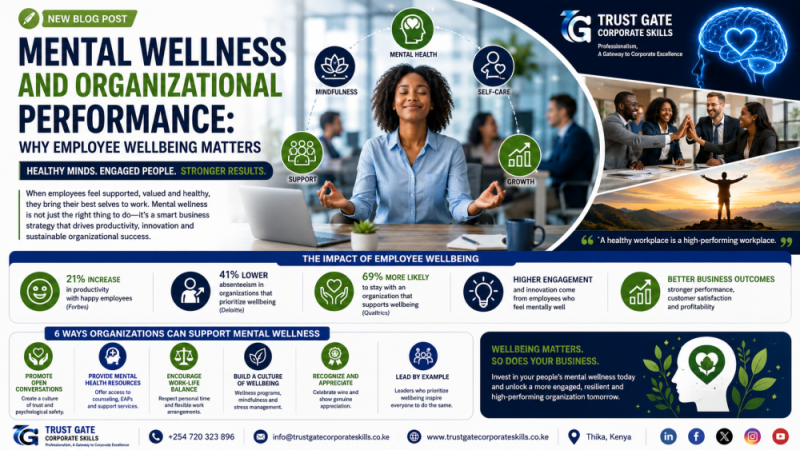
Mental Wellness and Organizational Performance: Why Employee Wellbeing Matters
Mental wellness refers to an employee’s emotional, psychological, and social wellbeing. It affects how employees think, feel, communicate, handle stress, make decisions, and perform their daily responsibilities.