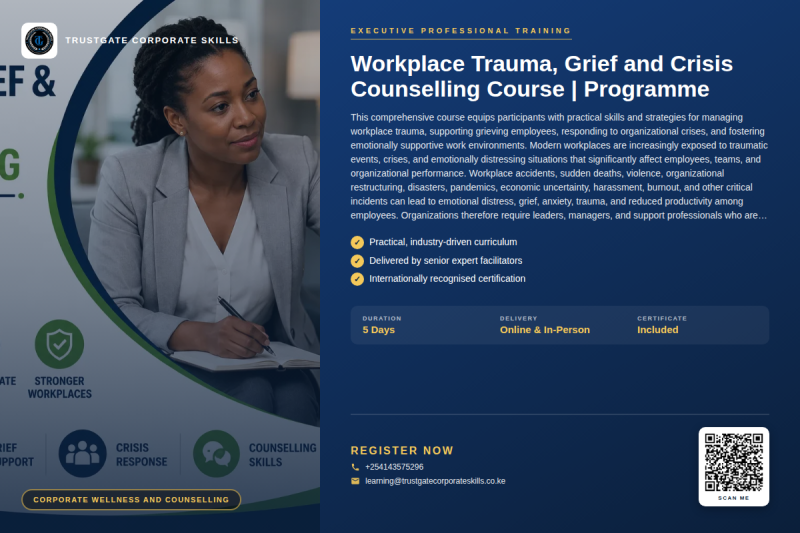
Modern workplaces are increasingly exposed to situations that can have a profound emotional and psychological impact on employees. Workplace accidents, sudden deaths, violence, organizational restructuring, disasters, pandemics, economic uncertainty, harassment, burnout and other critical incidents can disrupt not only individuals but also teams and entire organizations. How an organization responds during such moments can significantly influence employee wellbeing, trust, productivity and organizational resilience. This makes workplace trauma, grief and crisis counselling an increasingly important capability for managers, HR professionals, counsellors and organizational leaders.
Understanding Workplace Trauma, Grief and Crisi
Workplace trauma can occur when employees experience or witness events that overwhelm their normal ability to cope. The effects may include anxiety, emotional distress, difficulty concentrating, absenteeism, reduced productivity, interpersonal conflict and withdrawal from colleagues. Grief is equally important. Although often associated with bereavement, employees may also experience grief following organizational restructuring, redundancy, loss of colleagues, career disruption or major personal and professional changes. A workplace crisis may affect many employees simultaneously. Organizations therefore require more than an improvised response. They need structured systems for crisis preparedness, psychological support, communication, referral and recovery.
Why Organizations Need Workplace Crisis Counselling Skills
Organizations have traditionally concentrated on physical workplace safety. Today, effective people management increasingly requires attention to psychological wellbeing and psychosocial risks as well. Managers and HR professionals are often among the first people employees’ approach after a traumatic incident. Without appropriate preparation, even well-intentioned interventions can be ineffective. Training in workplace trauma, grief and crisis counselling helps professionals understand how to provide appropriate initial support, communicate sensitively, recognize employees who may require specialist assistance and establish suitable referral mechanisms. Importantly, workplace counselling training should not be viewed as turning managers into clinical psychologists. Rather, it strengthens their ability to recognise, respond, support and refer appropriately.
Key Areas of Workplace Trauma and Crisis Management
An effective organizational approach should integrate several interconnected areas:
- Trauma awareness: Understanding common workplace traumatic events and their potential effects on employees.
- Grief and bereavement support: Helping managers respond appropriately when employees experience loss.
- Crisis intervention: Establishing immediate and coordinated responses following critical incidents.
- Psychological First Aid: Providing humane, practical and supportive assistance while recognizing professional boundaries.
- Crisis communication: Communicating accurately and compassionately during highly sensitive situations.
- Employee referral systems: Knowing when and how employees should be referred to qualified mental-health or other professional services.
- Manager and HR preparedness: Equipping organizational leaders to manage emotionally difficult workplace situations.
- Recovery and resilience: Supporting employees and teams as they return to normal functioning following a crisis.
The Role of Leadership and HR
· Workplace trauma management cannot be left solely to counsellors. Leadership plays a major role in determining how effectively an organization responsible
Managers should know how to communicate with affected employees without being intrusive, maintain confidentiality, provide reasonable workplace support and recognise situations requiring professional intervention.
· HR departments also have an important responsibility in developing policies and procedures covering critical incident response, employee assistance, bereavement, psychosocial risk, referrals and return-to-work support.
· A well-prepared organization therefore combines leadership, HR systems, counselling expertise and organizational crisis-management procedures.