Environmental & Social Risk Management (ESRM) Course
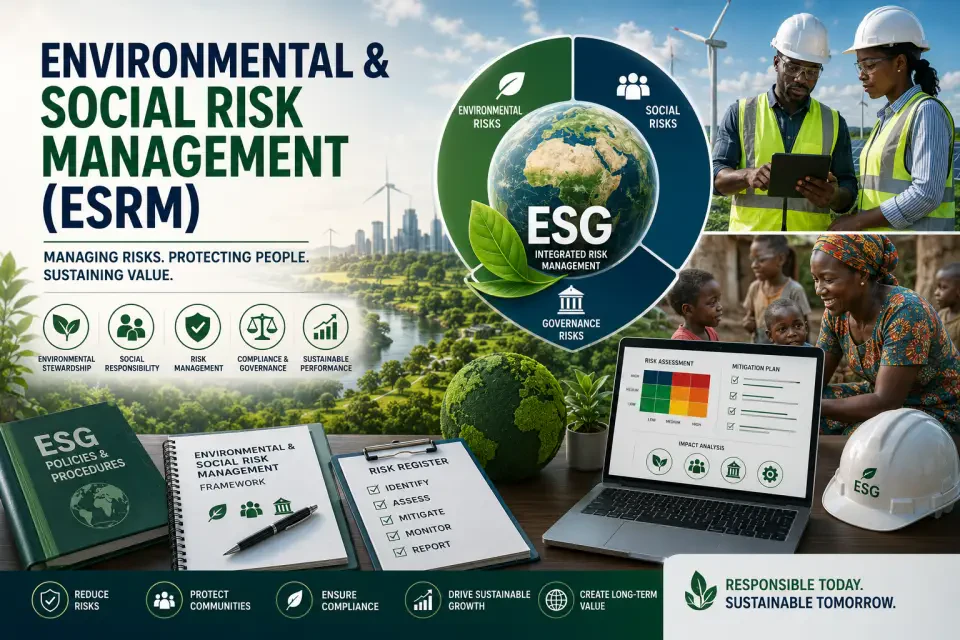
The Environmental & Social Risk Management (ESRM) Course is a 5-day professional training programme delivered in-person or online in Risk Management, ending with a TrustGate Corporate Skills certificate of completion.
The Environmental and Social Risk Management (ESRM) Course equips senior executives, risk managers, project leaders, regulators, financial institutions, and sustainability professionals with the strategic knowledge and practical tools required to integrate environmental and so...
Last updated
Course Overview
Learning Objectives
- Understand Environmental and Social Risk Management (ESRM) principles and international best practices.
- Identify and assess environmental, climate, biodiversity, and social risks across projects and operations.
- Conduct environmental and social due diligence for investments, infrastructure, and development programmes.
- Integrate ESG risks into enterprise risk management and strategic decision-making.
- Design effective environmental and social safeguard systems.
- Strengthen stakeholder engagement and grievance management processes.
- Ensure compliance with environmental legislation and international safeguard standards.
- Monitor environmental and social performance using appropriate indicators and reporting frameworks.
- Improve project sustainability, resilience, and responsible investment outcomes.
- Lead the implementation of organization-wide ESRM frameworks that enhance governance and stakeholder confidence.
Course Content
- Principles of Environmental and Social Risk Management (ESRM)
- ESG risk and sustainability concepts
- Global environmental and social risk trends
- Regulatory and institutional drivers
- Environmental risk identification and analysis
- Climate-related physical and transition risks
- Biodiversity and ecosystem risk management
- Pollution prevention and resource management
- Social impact identification and assessment
- Human rights due diligence
- Labour standards and occupational health and safety
- Community health, safety, and security
- Environmental and social screening
- Due diligence methodologies
- Project appraisal and investment review
- Risk categorization and mitigation planning
- Environmental safeguard frameworks
- Social safeguard policies
- Involuntary resettlement and livelihood restoration
- Indigenous Peoples and vulnerable groups
- Stakeholder identification and analysis
- Meaningful consultation and participation
- Grievance redress mechanisms
- Conflict prevention and social license to operate
- Integrating ESRM into Enterprise Risk Management (ERM)
- Governance, Risk, and Compliance (GRC)
- ESG risk governance and oversight
- Strategic risk reporting
- Environmental and social performance indicators
- Monitoring and evaluation systems
- Sustainability reporting and ESG disclosures
- Assurance and continuous improvement
- Sustainable infrastructure development
- Green and climate-resilient projects
- Responsible investment principles
- Financing sustainable development
Who Should Attend?
- Chief Executive Officers
- Chief Risk Officers
- Project Directors
- Environmental Managers
- Sustainability Managers
- ESG Managers
- Development Finance Professionals
- Commercial Bank Executives
- Investment Managers
- Infrastructure Project Managers
- Procurement Managers
- Compliance Officers
- Internal Auditors
- Environmental Regulators
- County Government Officials
- Development Partners
- Consultants
- NGO Executives
- Engineers and Project Specialists
- Corporate Governance Professionals
Training Methodology
- Executive presentations
- Interactive discussions
- International case studies
- Risk assessment simulations
- Practical workshops
- Group assignments
- Policy and project laboratories
- Peer learning
- Executive coaching
- Action planning sessions
What's Included
Certification
Certificate in Environmental & Social Risk Management (ESRM)
Issued by: TRUSTGATE CORPORATE SKILLS
Frequently Asked Questions
How long is the Environmental & Social Risk Management (ESRM) Course training?
The Environmental & Social Risk Management (ESRM) Course runs for 5 Days. Each day combines expert-led teaching with practical, hands-on exercises so participants can apply what they learn immediately.
Is the Environmental & Social Risk Management (ESRM) Course delivered online or in-person?
This course is delivered in person (scheduled venues include Mombasa, Nairobi, Kampala, Dar es Salaam), live online, or in-house at your organisation.
How much does the Environmental & Social Risk Management (ESRM) Course cost?
The fee is US$600 per person online and US$1,400 per person in person. In-person fees depend on the participant's country; the pricing card on this page shows the fee for yours.
When is the next Environmental & Social Risk Management (ESRM) Course training?
The next scheduled session runs from 16 November 2026 to 20 November 2026 in Mombasa, Kenya. You can also request a custom date or an in-house session for your team.
Do I get a certificate after completing the Environmental & Social Risk Management (ESRM) Course?
Yes. Participants who complete the Environmental & Social Risk Management (ESRM) Course receive a certificate of completion from TRUSTGATE CORPORATE SKILLS.
What will I learn in the Environmental & Social Risk Management (ESRM) Course?
Key learning outcomes include: Understand Environmental and Social Risk Management (ESRM) principles and international best practices; Identify and assess environmental, climate, biodiversity, and social risks across projects and operations; Conduct environmental and social due diligence for investments, infrastructure, and development programmes; Integrate ESG risks into enterprise risk management and strategic decision-making; Design effective environmental and social safeguard systems.