Real Estate and Property Management Professional (REPMP)10-Day Executive and Professional Training Programme
The Real Estate and Property Management Professional (REPMP)10-Day Executive and Professional Training Programme is a 10-day professional training programme delivered in-person or online in Real Estate and Property Management, ending with a TrustGate Corporate Skills certificate of completion.
The Real Estate and Property Management Professional (CREPMP) is a comprehensive professional development programme designed to equip real estate practitioners, property managers, investors, facilities managers and institutional property administrators with the strategic, tech...
Last updated
Course Overview
Learning Objectives
- Analyse real estate markets, investment opportunities and emerging property trends.
- Analyse real estate markets, investment opportunities and emerging property trends.
- Apply strategic approaches to property acquisition, development, management and disposal.
- Evaluate property investments using financial analysis and internationally recognized valuation principles.
- Develop effective leasing, tenant management and rental income optimisation strategies.
- Implement property maintenance, facilities management and asset lifecycle programmes.
- Apply legal, regulatory, ethical and governance principles in property management.
- Establish property budgeting, accounting, reporting and financial control systems.
- Identify and manage operational, financial, environmental and legal property risks.
- Integrate PropTech, artificial intelligence and digital systems into real estate operations.
- Develop strategic property management plans and performance monitoring frameworks.
Course Content
- Concepts, scope and principles of real estate management
- Types and classifications of real estate assets
- Structure and dynamics of international real estate markets
- Roles and responsibilities of real estate and property management professionals
- Real estate market analysis and investment cycles
- Demand, supply and property market dynamics
- Macroeconomic factors influencing property performance
- Emerging trends and investment opportunities in global real estate
- Property investment appraisal and feasibility analysis
- Return on investment, net present value and internal rate of return
- Cash flow forecasting and investment profitability
- Real estate portfolio diversification and investment strategies
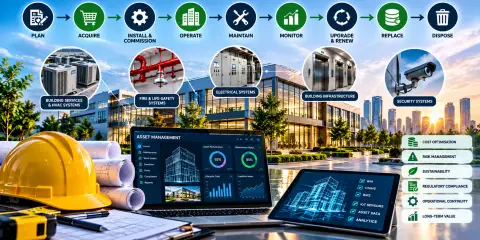
- Property asset lifecycle management
- Strategic asset planning and portfolio optimisation
- Property acquisition, redevelopment and disposal strategies
- Maximising long-term property value and investment returns
- Principles and internationally recognized property valuation standards
- Market comparison, income and cost valuation approaches
- Property valuation for investment, financing and insurance
- Valuation reporting, assumptions and professional ethics
- Real estate financing structures and funding options
- Mortgage financing, leverage and debt management
- Property budgeting, accounting and financial reporting
- Rental yield analysis, operating expenses and financial performance
- Lease structures, terms and contractual obligations
- Lease negotiation, documentation and administration
- Rent reviews, lease renewals and termination procedures
- Managing lease defaults and contractual disputes
- Tenant acquisition, screening and onboarding
- Tenant communication and relationship management
- Tenant satisfaction, retention and service quality
- Complaints handling, dispute resolution and eviction procedures
- Preventive, corrective and predictive maintenance strategies
- Property inspection and condition assessment
- Maintenance planning, scheduling and cost control
- Contractor supervision and service-level agreements
- Integrated facilities management principles
- Building systems, utilities and infrastructure management
- Workplace safety, security and emergency preparedness
- Facilities performance monitoring and service optimisation
- Property ownership, land tenure and property rights
- Property transactions, registration and documentation
- Landlord–tenant legislation and regulatory obligations
- Property taxation, zoning, planning and development controls
- Corporate governance in real estate management
- Professional ethics, accountability and transparency
- Anti-money laundering and real estate transaction integrity
- Regulatory compliance monitoring and internal controls
- Identification and assessment of property-related risks
- Property insurance, liability and risk transfer
- Business continuity and disaster recovery planning
- Property risk registers and mitigation strategies
- Environmental, social and governance principles in real estate
- Green buildings and sustainable property operations
- Energy efficiency, water conservation and waste management
- Climate resilience and sustainability performance reporting
- Digital property management platforms and applications
- Automated rent collection and tenant management systems
- Property data management, analytics and reporting
- Smart buildings, IoT and integrated building management systems
- Artificial intelligence applications in property management
- Predictive maintenance and intelligent asset monitoring
- AI-supported market forecasting and investment analysis
- Digital transformation strategies and cybersecurity in real estate
- Property management key performance indicators
- Occupancy rates, rental yields and net operating income
- Property performance dashboards and management reports
- Benchmarking property performance against industry standards
- Managing residential, commercial and mixed-use property portfolios
- Stakeholder mapping, engagement and relationship management
- Property management outsourcing and service provider evaluation
- Strategic portfolio reviews and asset optimisation
- Developing a strategic property management plan
- Aligning property strategies with organisational objectives
- Property management implementation frameworks
- Resource allocation, accountability and performance monitoring
- Integrated real estate investment and property management case study
- Preparation of a property management operational budget
- Development of a property risk and performance management matrix
- Presentation of institutional property management improvement plans
Who Should Attend?
- Real estate and property managers
- Real estate investors and property developers
- Facilities and estate managers
- Property asset and portfolio managers
- Housing and residential estate administrators
- Commercial property and leasing officers
- Property valuation and investment professionals
- Bank mortgage and real estate finance officers
- Government land and housing officials
- Institutional property administrators
- Real estate consultants and entrepreneurs
- Corporate executives responsible for property investments
Training Methodology
- Executive-level presentations
- Leadership case studies
- Strategic planning workshops
- Budgeting exercises
- KPI development exercises
- Management simulations
- Group discussions
- Peer learning
- Problem-solving
- Strategic decision-making exercises
Is this course for you?
Level: Advanced
Problems this course solves
- Poor property investment returns and financial inefficiencies: Addresses weak investment analysis, uncontrolled operating expenses, rental income leakage and inadequate asset performance monitoring.
- Ineffective property operations and tenant management: Strengthens leasing procedures, tenant retention, rent collection, dispute resolution and property maintenance systems.
- Regulatory non-compliance and property-related risks: Improves understanding of property legislation, contractual obligations, governance, insurance, safety and regulatory requirements.
- Limited adoption of modern real estate management practices: Builds competencies in PropTech, digital property management, sustainability, smart buildings and data-driven asset management.
What's Included
Certification
Certificate in Real Estate and Property Management Professional (REPMP)
Issued by: TRUSTGATE CORPORATE SKILLS
Frequently Asked Questions
How long is the Real Estate and Property Management Professional (REPMP)10-Day Executive and Professional Training Programme training?
The Real Estate and Property Management Professional (REPMP)10-Day Executive and Professional Training Programme runs for 10 Days. Each day combines expert-led teaching with practical, hands-on exercises so participants can apply what they learn immediately.
Is the Real Estate and Property Management Professional (REPMP)10-Day Executive and Professional Training Programme delivered online or in-person?
This course is delivered in person (scheduled venues include Nairobi, Mombasa, Lusaka, Kigali), live online, or in-house at your organisation.
How much does the Real Estate and Property Management Professional (REPMP)10-Day Executive and Professional Training Programme cost?
The fee is US$1,200 per person online and US$2,800 per person in person. In-person fees depend on the participant's country; the pricing card on this page shows the fee for yours.
When is the next Real Estate and Property Management Professional (REPMP)10-Day Executive and Professional Training Programme training?
A session is running now, from 23 November 2026 to 4 December 2026 in Nairobi, Kenya. The next one runs from 30 November 2026 to 11 December 2026 in Mombasa, Kenya. You can also request a custom date or an in-house session for your team.
Do I get a certificate after completing the Real Estate and Property Management Professional (REPMP)10-Day Executive and Professional Training Programme?
Yes. Participants who complete the Real Estate and Property Management Professional (REPMP)10-Day Executive and Professional Training Programme receive a certificate of completion from TRUSTGATE CORPORATE SKILLS.
What will I learn in the Real Estate and Property Management Professional (REPMP)10-Day Executive and Professional Training Programme?
Key learning outcomes include: Analyse real estate markets, investment opportunities and emerging property trends; Analyse real estate markets, investment opportunities and emerging property trends; Apply strategic approaches to property acquisition, development, management and disposal; Evaluate property investments using financial analysis and internationally recognized valuation principles; Develop effective leasing, tenant management and rental income optimisation strategies.