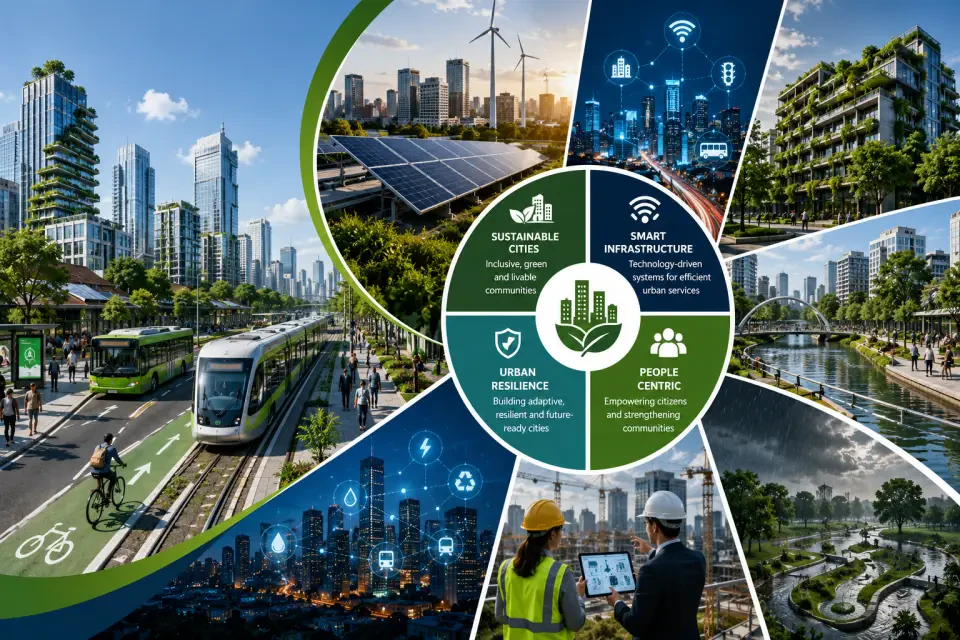
Sustainable Cities, Smart Infrastructure and Urban Resilience Course
The Sustainable Cities, Smart Infrastructure and Urban Resilience Course is a 5-day professional training programme delivered in-person or online in Climate Change, ESG & Sustainability, ending with a TrustGate Corporate Skills certificate of completion.
The Executive Course in Sustainable Cities, Smart Infrastructure and Urban Resilience equips senior government officials, urban planners, city managers, engineers, infrastructure developers, policymakers, and development practitioners with the strategic knowledge and practical...
Last updated
Course Overview
Learning Objectives
- Understand sustainable city development and smart city principles.
- Design climate-resilient and inclusive urban development strategies.
- Integrate ESG principles into urban planning and infrastructure projects.
- Strengthen governance for smart cities and sustainable public service delivery.
- Improve sustainable transport systems and urban mobility.
- Enhance infrastructure resilience against climate and disaster risks.
- Apply digital technologies to improve city management and public services.
- Mobilize sustainable financing for urban development initiatives.
- Monitor urban sustainability performance using global indicators.
- Lead city transformation through innovation, resilience, and strategic governance.
Course Content
- Principles of sustainable urban development
- Smart city concepts and global trends
- ESG in urban governance
- Urban sustainability frameworks
- Integrated urban planning
- Land use and spatial planning
- Inclusive urban development
- Compact and transit-oriented development
- Climate-resilient infrastructure design
- Green infrastructure solutions
- Critical infrastructure resilience
- Nature-based urban solutions
- Sustainable urban mobility planning
- Intelligent transport systems
- Green public transport
- Non-motorized transport infrastructure
- Smart governance principles
- Digital government and citizen engagement
- ESG integration in municipal governance
- Performance-driven public service delivery
- Urban climate adaptation
- Disaster risk reduction strategies
- Emergency preparedness in cities
- Community resilience planning
- Municipal finance strategies
- Green bonds and climate finance
- Public-private partnerships (PPPs)
- Sustainable infrastructure investment
- Internet of Things (IoT) for smart cities
- Artificial Intelligence and city management
- Geographic Information Systems (GIS)
- Urban data analytics and dashboards
- Circular economy in urban development
- Waste management and resource recovery
- Renewable energy integration
- Water security and sustainable resource management
- Urban sustainability maturity assessment
- City resilience roadmap
- Implementation and governance framework
- Monitoring, evaluation and continuous improvement
Who Should Attend?
- Governors
- County Executive Committee Members
- County Chief Officers
- City Managers
- Municipal Managers
- Urban Planners
- Physical Planners
- Engineers
- Architects
- Infrastructure Development Managers
- Public Works Officials
- Transport Planners
- Smart City Project Managers
- Environmental Managers
- Sustainability Managers
- ICT Directors
- Utility Managers
- Development Partners
- Consultants
- Board Members
Training Methodology
- Executive presentations
- Interactive discussions
- International city case studies
- Urban planning simulations
- Practical workshops
- Strategy laboratories
- Group assignments
- Peer learning
- Executive coaching
- Action planning sessions
What's Included
Certification
Certificate in Sustainable Cities, Smart Infrastructure and Urban Resilience
Issued by: TRUSTGATE CORPORATE SKILLS
Frequently Asked Questions
How long is the Sustainable Cities, Smart Infrastructure and Urban Resilience Course training?
The Sustainable Cities, Smart Infrastructure and Urban Resilience Course runs for 5 Days. Each day combines expert-led teaching with practical, hands-on exercises so participants can apply what they learn immediately.
Is the Sustainable Cities, Smart Infrastructure and Urban Resilience Course delivered online or in-person?
This course is delivered in person (scheduled venues include Mombasa, Nairobi, Kigali, Lagos), live online, or in-house at your organisation.
How much does the Sustainable Cities, Smart Infrastructure and Urban Resilience Course cost?
The fee is US$600 per person online and US$1,400 per person in person. In-person fees depend on the participant's country; the pricing card on this page shows the fee for yours.
When is the next Sustainable Cities, Smart Infrastructure and Urban Resilience Course training?
The next scheduled session runs from 9 November 2026 to 13 November 2026 in Mombasa, Kenya. You can also request a custom date or an in-house session for your team.
Do I get a certificate after completing the Sustainable Cities, Smart Infrastructure and Urban Resilience Course?
Yes. Participants who complete the Sustainable Cities, Smart Infrastructure and Urban Resilience Course receive a certificate of completion from TRUSTGATE CORPORATE SKILLS.
What will I learn in the Sustainable Cities, Smart Infrastructure and Urban Resilience Course?
Key learning outcomes include: Understand sustainable city development and smart city principles; Design climate-resilient and inclusive urban development strategies; Integrate ESG principles into urban planning and infrastructure projects; Strengthen governance for smart cities and sustainable public service delivery; Improve sustainable transport systems and urban mobility.