ICT Strategic Planning, Governance and Management Course
The ICT Strategic Planning, Governance and Management Course is a 5-day professional training programme delivered in-person or online in ICT-Information & Communication Technology, ending with a TrustGate Corporate Skills certificate of completion.
The ICT Strategic Planning, Governance and Management programme is designed to strengthen the capacity of ICT leaders, managers, public-sector administrators and organisational executives to plan, govern and manage information and communication technology as a strategic instit...
Course Overview
Learning Objectives
- Explain the principles and strategic role of ICT governance and management.
- Align ICT priorities with organisational strategies, mandates and performance targets.
- Conduct ICT capability assessments and identify technology gaps.
- Develop practical ICT strategic plans, policies and implementation roadmaps.
- Establish decision-making structures and accountability for ICT investments.
- Improve ICT budgeting, procurement and technology resource allocation.
- Apply enterprise architecture principles to technology planning.
- Strengthen ICT risk management, cybersecurity oversight and business continuity.
- Monitor ICT project delivery, service quality and investment performance.
- Develop an ICT governance and performance improvement framework.
Course Content
- The role of ICT in organisational performance and service delivery.
- Distinguishing ICT governance, management and operational support.
- Principles of accountability, transparency, value creation and control.
- Responsibilities of boards, executive management and ICT leadership.
- Reviewing organisational strategy, mandates and operational priorities.
- Assessing existing ICT infrastructure, applications and service capabilities.
- Identifying business requirements, system gaps and duplication.
- Stakeholder consultation and Prioritisation of technology needs.
- Formulating ICT vision, mission, strategic objectives and priorities.
- Defining strategic initiatives, deliverables and implementation milestones.
- Preparing ICT implementation roadmaps and resource requirements.
- Aligning ICT plans with corporate, departmental and national digital priorities.
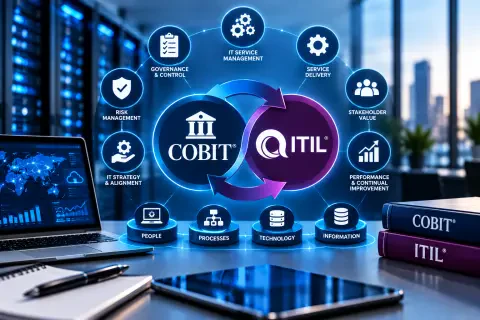
- Governance principles and the use of recognized frameworks such as COBIT.
- Developing ICT policies, standards, procedures and delegated authorities.
- ICT steering committees, escalation mechanisms and decision rights.
- Monitoring compliance, accountability and governance effectiveness.
- Preparing ICT budgets and multi-year technology investment plans.
- Evaluating business cases, lifecycle costs and investment alternatives.
- Prioritising competing technology projects and resource demands.
- Monitoring expenditure, benefits realization and budget performance.
- Introduction to enterprise architecture and business-technology alignment.
- Mapping business processes, applications, data and infrastructure.
- Technology standards, interoperability and integration requirements.
- Managing legacy systems, technical debt and architecture changes.
- Developing technology specifications and procurement requirements.
- Evaluating suppliers, solutions and service proposals.
- Managing service-level agreements, contracts and vendor performance.
- Addressing outsourcing risks, supplier dependencies and exit arrangements.
- Identifying strategic, operational and technological risks.
- Cybersecurity governance, privacy and data protection responsibilities.
- Disaster recovery planning and ICT business continuity.
- Risk registers, control monitoring and incident escalation.
- Service management principles and user support arrangements.
- Defining service-level agreements and operational performance standards.
- ICT KPIs, dashboards, user satisfaction and service availability.
- Internal controls, audit readiness and continuous service improvement.
- Conducting an ICT governance and capability gap assessment.
- Developing strategic initiatives, priorities and implementation schedules.
- Preparing an ICT budget, risk register and accountability matrix.
- Presenting an ICT strategic plan and performance monitoring framework.
Who Should Attend?
- ICT managers, directors and heads of information technology.
- CIOs, IT governance officers and technology planners.
- Chief executives and departmental managers responsible for ICT investments.
- Government ICT officers and public-sector administrators.
- Internal auditors, risk managers and compliance professionals.
- Procurement, finance and project management officers working with ICT.
- University, TVET, NGO and corporate ICT leadership teams.
Training Methodology
- Facilitator-led presentations
- ICT governance case studies
- ICT capability assessment exercises
- Strategic planning workshops
- Group discussions and peer learning
- Budgeting and investment appraisal exercises
- Risk assessment simulations
- Framework development exercises
Is this course for you?
Level: Advanced
Problems this course solves
- Misalignment between ICT and organisational strategy: Helps ensure technology priorities support institutional mandates, strategic objectives, and performance targets.
- Weak ICT governance and accountability: Establishes clear decision-making structures, responsibilities, policies, and oversight mechanisms.
- Inefficient ICT spending and resource allocation: Improves budgeting, procurement, investment appraisal, and utilisation of technology resources.
- Poor ICT risk and performance management: Strengthens cybersecurity oversight, business continuity, project monitoring, service quality, and measurement of ICT investment outcomes
What's Included
Certification
Certificate in ICT Strategic Planning, Governance and Management
Issued by: TRUSTGATE CORPORATE SKILLS
Frequently Asked Questions
How long is the ICT Strategic Planning, Governance and Management Course training?
The ICT Strategic Planning, Governance and Management Course runs for 5 Days. Each day combines expert-led teaching with practical, hands-on exercises so participants can apply what they learn immediately.
Is the ICT Strategic Planning, Governance and Management Course delivered online or in-person?
This course is delivered in person (scheduled venues include Nairobi, Kigali, Mombasa, Dar es Salaam), live online, or in-house at your organisation.
How much does the ICT Strategic Planning, Governance and Management Course cost?
The fee is US$600 per person online and US$1,400 per person in person. In-person fees depend on the participant's country; the pricing card on this page shows the fee for yours.
When is the next ICT Strategic Planning, Governance and Management Course training?
A session is running now, from 2 November 2026 to 6 November 2026 in Nairobi, Kenya. The next one runs from 9 November 2026 to 13 November 2026 in Kigali, Rwanda. You can also request a custom date or an in-house session for your team.
Do I get a certificate after completing the ICT Strategic Planning, Governance and Management Course?
Yes. Participants who complete the ICT Strategic Planning, Governance and Management Course receive a certificate of completion from TRUSTGATE CORPORATE SKILLS.
What will I learn in the ICT Strategic Planning, Governance and Management Course?
Key learning outcomes include: Explain the principles and strategic role of ICT governance and management; Align ICT priorities with organisational strategies, mandates and performance targets; Conduct ICT capability assessments and identify technology gaps; Develop practical ICT strategic plans, policies and implementation roadmaps; Establish decision-making structures and accountability for ICT investments.