Virtualization, Containerization and Infrastructure Automation Course
The Virtualization, Containerization and Infrastructure Automation Course is a 5-day professional training programme delivered in-person or online in ICT-Information & Communication Technology, ending with a TrustGate Corporate Skills certificate of completion.
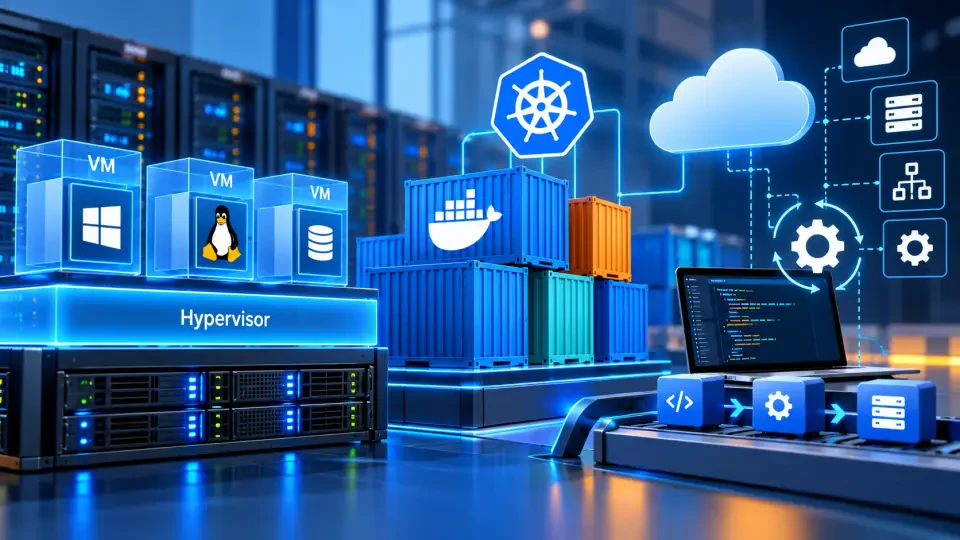
This programme develops the competencies required to deploy and manage virtual machines, containerized applications and automated infrastructure environments. It examines hypervisors, virtual machine configuration, resource allocation, virtual networking, container images, Doc...
Course Overview
Learning Objectives
- Explain virtualization, containerization and infrastructure automation.
- Deploy and manage virtual machines.
- Configure virtual computing, networking and storage resources.
- Build and manage containers using Docker.
- Explain Kubernetes architecture and orchestration fundamentals.
- Apply infrastructure-as-code and configuration management principles.
- Identify opportunities to improve infrastructure efficiency through automation.
Course Content
- Virtualization concepts, history and business applications.
- Type 1 and Type 2 hypervisors and their operating principles.
- Virtual machines, hosts, guests and resource abstraction.
- Virtualization benefits, limitations and deployment considerations.
- Hypervisor installation and initial configuration.
- Creating, cloning, importing and exporting virtual machines.
- CPU, memory, storage and network resource allocation.
- Snapshots, templates and virtual machine lifecycle management.
- Virtual switches, network adapters and virtual network segments.
- Bridged, NAT and host-only networking concepts.
- Virtual disks, storage pools and shared storage fundamentals.
- Virtual machine backup, recovery and data protection.
- Resource monitoring, capacity planning and performance tuning.
- High availability, fault tolerance and workload recovery concepts.
- Access controls, administrative security and configuration protection.
- Virtual infrastructure documentation and operational management.
- Containers, images and the container runtime model.
- Containers versus virtual machines: architecture and use cases.
- Container registries, image repositories and image lifecycle.
- Container networking, storage and resource isolation.
- Installing Docker and managing the container environment.
- Building, tagging, pulling and running container images.
- Docker files, environment variables and persistent volumes.
- Docker Compose, multi-container applications and troubleshooting.
- Kubernetes architecture, control plane and worker nodes.
- Pods, Deployments, ReplicaSets and application scaling.
- Services, ingress concepts, configuration and secrets.
- Health checks, rolling updates and workload recovery
- Infrastructure-as-code principles and declarative configuration.
- Terraform fundamentals and infrastructure provisioning concepts.
- Ansible fundamentals, inventories, playbooks and configuration tasks.
- Version control, reusable templates and configuration consistency
- Automated deployment workflows and repeatable infrastructure provisioning.
- Infrastructure metrics, logging and monitoring fundamentals.
- Resource utilization, scaling policies and capacity optimization.
- Security scanning, patching and configuration drift management
- Designing a virtualized infrastructure for an organizational workload.
- Packaging an application into a container image.
- Deploying a containerized workload and automating configuration.
- Demonstrating monitoring, troubleshooting and infrastructure improvement recommendations.
Who Should Attend?
- Systems and infrastructure administrators.
- Cloud engineers and cloud administrators.
- DevOps engineers and technical support professionals.
- IT infrastructure architects.
- Data center and server management teams.
- Software deployment and platform operations personnel.
- IT professionals supporting cloud-native applications.
- Technical professionals involved in infrastructure modernization
Training Methodology
- Instructor-led technical presentations.
- Virtual machine deployment laboratories.
- Docker containerization exercises.
- Guided Kubernetes demonstrations.
- Infrastructure automation workshops.
- Configuration management exercises.
- Practical infrastructure modernization projects.
Is this course for you?
Level: Intermediate
Problems this course solves
- Underutilized computing resources: Introduces virtualization and resource consolidation techniques.
- Inconsistent application deployments: Uses containers and standardized configurations to improve consistency.
- Slow manual infrastructure provisioning: Develops skills in automation and infrastructure as code.
- Difficulty scaling and maintaining workloads: Introduces orchestration, monitoring and repeatable deployment practices.
What's Included
Certification
Certificate Virtualization, Containerization and Infrastructure Automation
Issued by: TRUSTGATE CORPORATE SKILLS
Frequently Asked Questions
How long is the Virtualization, Containerization and Infrastructure Automation Course training?
The Virtualization, Containerization and Infrastructure Automation Course runs for 5 Days. Each day combines expert-led teaching with practical, hands-on exercises so participants can apply what they learn immediately.
Is the Virtualization, Containerization and Infrastructure Automation Course delivered online or in-person?
This course is delivered in person (scheduled venues include Nairobi, Arusha, Mombasa, Kigali), live online, or in-house at your organisation.
How much does the Virtualization, Containerization and Infrastructure Automation Course cost?
The fee is US$600 per person online and US$1,400 per person in person. In-person fees depend on the participant's country; the pricing card on this page shows the fee for yours.
When is the next Virtualization, Containerization and Infrastructure Automation Course training?
A session is running now, from 2 November 2026 to 6 November 2026 in Nairobi, Kenya. The next one runs from 9 November 2026 to 13 November 2026 in Arusha, Tanzania. You can also request a custom date or an in-house session for your team.
Do I get a certificate after completing the Virtualization, Containerization and Infrastructure Automation Course?
Yes. Participants who complete the Virtualization, Containerization and Infrastructure Automation Course receive a certificate of completion from TRUSTGATE CORPORATE SKILLS.
What will I learn in the Virtualization, Containerization and Infrastructure Automation Course?
Key learning outcomes include: Explain virtualization, containerization and infrastructure automation; Deploy and manage virtual machines; Configure virtual computing, networking and storage resources; Build and manage containers using Docker; Explain Kubernetes architecture and orchestration fundamentals.