Coaching, Counselling and Emotional Intelligence for Managers Course
The Coaching, Counselling and Emotional Intelligence for Managers Course is a 10-day professional training programme delivered in-person or online in Corporate Wellness and Counselling, ending with a TrustGate Corporate Skills certificate of completion.
This comprehensive course equips managers and supervisors with practical coaching, counselling, and emotional intelligence competencies necessary for managing diverse teams and supporting employee growth and performance. Modern organizations require managers and supervisors wh...
Last updated
Course Overview
Learning Objectives
- Understand the principles and importance of emotional intelligence in leadership and management.
- Develop self-awareness, self-regulation, empathy, and interpersonal communication skills.
- Differentiate between coaching, mentoring, counselling, and supervision roles in the workplace.
- Apply coaching techniques to improve employee performance, motivation, and development.
- Use counselling approaches to support employees facing workplace and personal challenges.
- Manage employee emotions, workplace stress, and interpersonal conflicts effectively.
- Conduct difficult conversations and deliver constructive feedback professionally.
- Promote trust, psychological safety, and positive workplace relationships.
- Strengthen employee engagement, resilience, and teamwork through supportive leadership.
- Build emotionally intelligent workplace cultures that enhance productivity and employee wellbeing.
Course Content
- Understanding emotional intelligence and its importance
- Components of emotional intelligence
- Self-awareness and emotional self-assessment
- Self-regulation and emotional control
- Empathy and social awareness in leadership
- Relationship management and interpersonal effectiveness
- Emotional intelligence and workplace performance
- Developing emotionally intelligent leadership styles
- Understanding workplace coaching and counselling
- Differences between coaching, counselling, mentoring, and supervision
- Roles and responsibilities of managers in employee support
- Ethical considerations in coaching and counselling
- Confidentiality and professional boundaries
- Identifying employee support needs
- Creating supportive workplace environments
- Benefits of coaching and counselling for organizations
- Understanding employee emotions and behaviour
- Emotional triggers and workplace reactions
- Managing stress, anxiety, and frustration in teams
- Handling emotionally charged situations
- Building emotional resilience in employees
- Workplace conflict and emotional management
- Managing difficult personalities and behaviours
- Supporting employees during organizational change
- Principles of performance coaching
- Goal setting and performance improvement planning
- Conducting effective coaching conversations
- Active listening and powerful questioning techniques
- Motivating employees for improved performance
- Coaching for accountability and ownership
- Supporting employee career growth and development
- Monitoring and evaluating coaching outcomes
- Preparing for difficult workplace conversations
- Managing sensitive discussions professionally
- Delivering constructive and corrective feedback
- Addressing poor performance and misconduct
- Conflict resolution and mediation techniques
- Communication skills for challenging situations
- Managing resistance and emotional reactions
- Building trust during difficult conversations
- Understanding psychological safety in organizations
- Creating trust and openness within teams
- Encouraging employee participation and engagement
- Inclusive leadership and respect in the workplace
- Managing workplace bullying and harassment
- Promoting mental wellbeing and employee support systems
- Strengthening teamwork and collaboration
- Developing positive organizational cultures
- Principles of effective workplace communication
- Verbal and non-verbal communication skills
- Emotional intelligence in communication
- Listening skills for managers and leaders
- Managing communication barriers
- Persuasive and motivational communication
- Communication during workplace crises and change
- Building strong professional relationships through communication
- Understanding employee wellbeing and engagement
- Motivational theories and workplace application
- Recognizing signs of burnout and disengagement
- Strategies for improving morale and motivation
- Work-life balance and employee support
- Recognition and appreciation strategies
- Building resilient and productive teams
- Leadership practices that promote employee wellbeing
- Sources of workplace conflict
- Emotional intelligence in conflict resolution
- Negotiation and mediation skills
- Managing interpersonal disputes
- Building collaborative workplace relationships
- Trust-building techniques for leaders
- Managing diversity and cultural differences
- Promoting harmony and teamwork in organizations
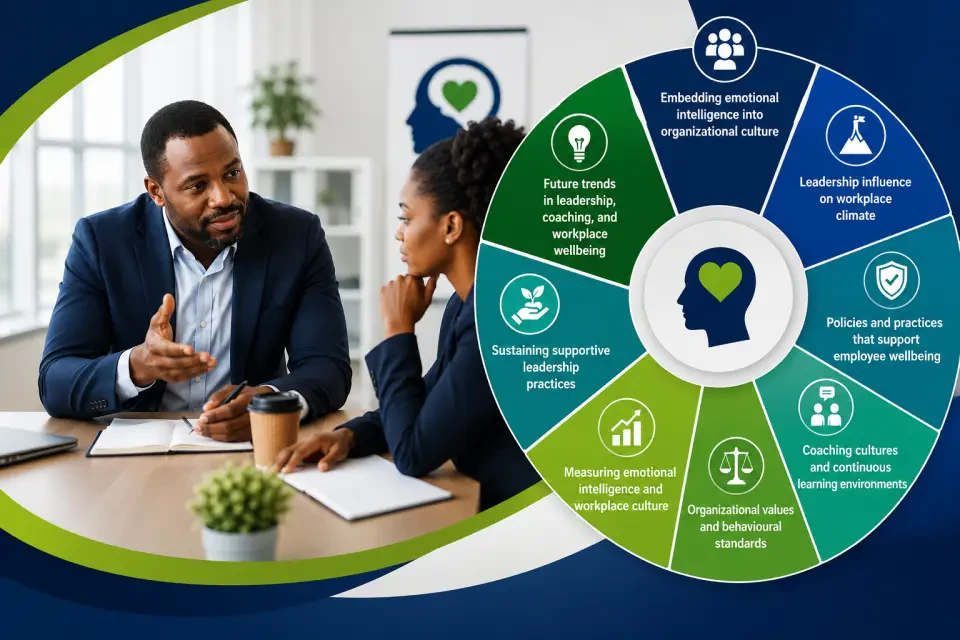
- Embedding emotional intelligence into organizational culture
- Leadership influence on workplace climate
- Policies and practices that support employee wellbeing
- Coaching cultures and continuous learning environments
- Organizational values and behavioural standards
- Measuring emotional intelligence and workplace culture
- Sustaining supportive leadership practices
- Future trends in leadership, coaching, and workplace wellbeing
Who Should Attend?
- Managers and Supervisors
- Team Leaders and Department Heads
- Human Resource Managers and Officers
- Employee Relations Officers
- Organizational Development Professionals
- Learning and Development Officers
- Workplace Counsellors and Coaches
- Project Managers and Programme Coordinators
- Corporate Executives and Administrators
- Public Sector Managers and Officers
- NGO and Development Sector Leaders
- Customer Service and Operations Managers
- Healthcare and Education Administrators
- Performance Management Professionals
- Labour Relations and Industrial Relations Officers
- Staff Welfare and Employee Wellness Coordinators
- Corporate Trainers and Facilitators
Training Methodology
- Interactive Expert-Led Sessions – Facilitator-led presentations incorporating global best practices, current research, and practical management frameworks.
- Case Studies and Real-World Scenarios – Analysis of workplace coaching, employee wellbeing, conflict resolution, and leadership challenges from both public and private sector organizations.
- Coaching Simulations and Role Plays – Hands-on practice in conducting coaching conversations, performance coaching, counselling sessions, and difficult employee discussions.
- Emotional Intelligence (EQ) Assessments – Self-assessment tools to measure emotional intelligence competencies and identify personal development areas.
- Psychometric and Personality Profiling – Introduction to selected behavioral assessment tools to enhance self-awareness and team effectiveness.
- Group Discussions and Peer Learning – Collaborative learning through experience sharing, problem-solving, and best practice exchange among participants.
- Practical Workshops – Guided exercises on active listening, empathy, emotional regulation, constructive feedback, and conflict management.
What's Included
Certification
Certificate in Coaching, Counselling and Emotional Intelligence
Issued by: TRUSTGATE CORPORATE SKILLS
Frequently Asked Questions
How long is the Coaching, Counselling and Emotional Intelligence for Managers Course training?
The Coaching, Counselling and Emotional Intelligence for Managers Course runs for 10 Days. Each day combines expert-led teaching with practical, hands-on exercises so participants can apply what they learn immediately.
Is the Coaching, Counselling and Emotional Intelligence for Managers Course delivered online or in-person?
This course is delivered in person (scheduled venues include Mombasa, Nairobi, Kigali, London), live online, or in-house at your organisation.
How much does the Coaching, Counselling and Emotional Intelligence for Managers Course cost?
The fee is US$1,200 per person online and US$2,800 per person in person. In-person fees depend on the participant's country; the pricing card on this page shows the fee for yours.
When is the next Coaching, Counselling and Emotional Intelligence for Managers Course training?
The next scheduled session runs from 16 November 2026 to 27 November 2026 in Mombasa, Kenya. You can also request a custom date or an in-house session for your team.
Do I get a certificate after completing the Coaching, Counselling and Emotional Intelligence for Managers Course?
Yes. Participants who complete the Coaching, Counselling and Emotional Intelligence for Managers Course receive a certificate of completion from TRUSTGATE CORPORATE SKILLS.
What will I learn in the Coaching, Counselling and Emotional Intelligence for Managers Course?
Key learning outcomes include: Understand the principles and importance of emotional intelligence in leadership and management; Develop self-awareness, self-regulation, empathy, and interpersonal communication skills; Differentiate between coaching, mentoring, counselling, and supervision roles in the workplace; Apply coaching techniques to improve employee performance, motivation, and development; Use counselling approaches to support employees facing workplace and personal challenges.