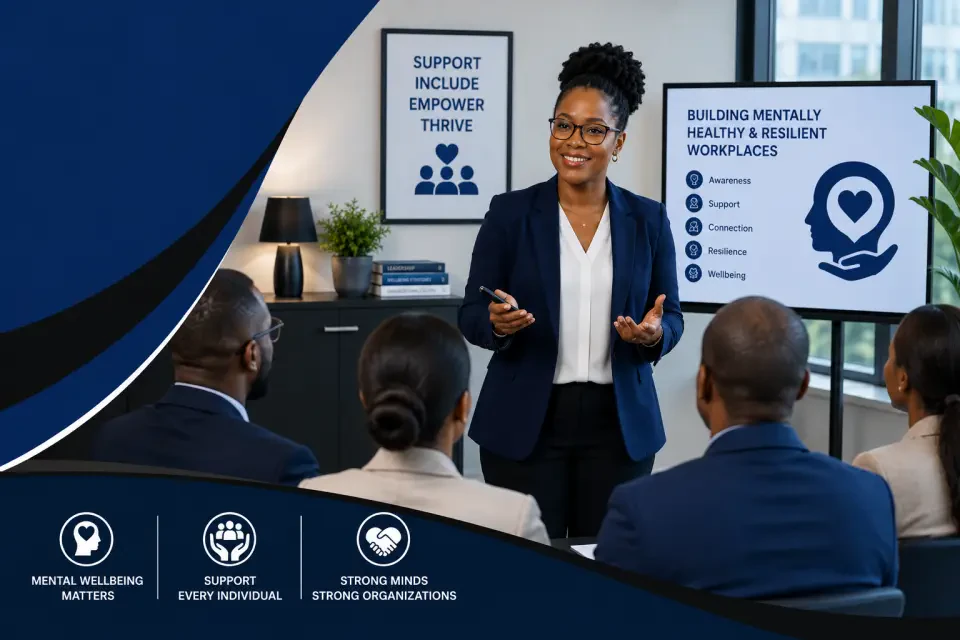
Employee Wellness Programme Design and Management Training
The Employee Wellness Programme Design and Management Training is a 5-day professional training programme delivered in-person or online in Corporate Wellness and Counselling, ending with a TrustGate Corporate Skills certificate of completion.
In today’s highly demanding and rapidly evolving work environment, organizations are increasingly recognizing employee wellness as a critical driver of productivity, employee engagement, talent retention, and institutional performance. Workplace challenges such as stress, burn...
Last updated
Course Overview
Learning Objectives
- Understand the principles and importance of employee wellness programmes in organizations.
- Conduct workplace wellness needs assessments and identify employee wellbeing challenges.
- Design comprehensive wellness programmes aligned with organizational goals and employee needs.
- Develop wellness policies, implementation plans, and organizational support systems.
- Plan and manage wellness programme budgets and resource allocation effectively.
- Develop employee engagement and wellness communication strategies.
- Implement mental health, stress management, and work-life balance initiatives.
- Establish monitoring, evaluation, and reporting systems for wellness programmes.
- Promote organizational cultures that support employee wellbeing and productivity.
- Develop sustainability and continuous improvement strategies for workplace wellness programmes.
Course Content
- Understanding employee wellness and workplace wellbeing
- Components of comprehensive wellness programmes
- Importance of employee wellness in organizational performance
- Relationship between wellness, productivity, and employee engagement
- Trends and emerging issues in workplace wellness
- Organizational responsibility in promoting employee wellbeing
- Global best practices in employee wellness management
- Conducting organizational wellness assessments
- Identifying employee health and wellbeing challenges
- Workplace stress and burnout analysis
- Employee surveys and data collection techniques
- Analyzing absenteeism and productivity trends
- Risk assessment for occupational wellbeing
- Prioritizing wellness intervention areas
- Developing wellness assessment reports
- Strategic planning for wellness programmes
- Aligning wellness initiatives with organizational goals
- Setting wellness objectives and performance indicators
- Designing inclusive and employee-centered wellness programmes
- Developing wellness action plans
- Integrating diversity and inclusion in wellness initiatives
- Policy development for workplace wellness
- Legal and ethical considerations in wellness programmes
- Workplace mental health awareness
- Managing stress, anxiety, and burnout
- Psychological safety in the workplace
- Employee counselling and support systems
- Developing mental health support policies
- Promoting emotional resilience and coping strategies
- Addressing stigma related to mental health
- Employee Assistance Programmes (EAPs)
- Workplace health promotion strategies
- Occupational health and safety principles
- Lifestyle disease prevention programmes
- Workplace ergonomics and injury prevention
- Nutrition, fitness, and healthy living initiatives
- Substance abuse awareness and prevention
- Workplace hygiene and health standards
- Promoting healthy work environments
- Building employee participation in wellness programmes
- Designing wellness awareness campaigns
- Communication strategies for wellness initiatives
- Motivating employees to participate in wellness activities
- Behaviour change and employee motivation techniques
- Wellness branding and organizational culture
- Use of digital platforms in wellness communication
- Leadership engagement in wellness promotion
- Budget preparation for wellness initiatives
- Cost-benefit analysis of wellness programmes
- Resource allocation and utilization
- Funding wellness activities and partnerships
- Procurement and management of wellness service providers
- Financial sustainability strategies for wellness programmes
- Managing wellness programme logistics
- Reporting and accountability in wellness budgeting
- Understanding work-life balance challenges
- Flexible work arrangements and employee wellbeing
- Managing workload and workplace pressure
- Creating supportive workplace cultures
- Employee recognition and motivation systems
- Diversity, inclusion, and employee wellbeing
- Leadership and organizational culture transformation
- Building healthy workplace relationships
- Developing wellness programme monitoring systems
- Key performance indicators for wellness initiatives
- Measuring employee participation and satisfaction
- Evaluating programme outcomes and organizational impact
- Data collection and reporting techniques
- Wellness analytics and performance measurement
- Continuous improvement frameworks
- Preparing wellness programme evaluation reports
- Developing sustainable wellness strategies
- Institutionalizing wellness programmes within organizations
- Leadership commitment and governance structures
- Continuous learning and programme adaptation
- Benchmarking and best practices in employee wellness
- Managing change in wellness programme implementation
- Long-term employee wellbeing planning
- Future trends in workplace wellness and organizational wellbeing systems
Who Should Attend?
- Human Resource Managers and Officers
- Employee Wellness Coordinators
- Occupational Health and Safety Professionals
- Organizational Development Specialists
- Corporate Affairs and Administrative Managers
- Learning and Development Professionals
- Employee Relations Officers
- Workplace Counsellors and Psychologists
- Corporate Communications Officers
- Team Leaders and Supervisors
- Health Promotion Practitioners
- Public Sector Human Resource Personnel
- NGO and Development Organization Managers
- Institutional Administrators
- Labour and Industrial Relations Officers
- Corporate Social Responsibility (CSR) Personnel
- Employee Assistance Programme (EAP) Coordinators
- Organizational Change and Culture Managers
- Consultants in Human Capital and Workplace Wellness
- Any professional responsible for employee wellbeing, engagement, and organizational performance.
Training Methodology
- Interactive Workshops
- Case Studies and simulations
- Brain Storming
- Root Cause Analysis Methodology
What's Included
Certification
Certificate in employee Wellness Design & Management
Issued by: TRUSTGATE CORPORATE SKILLS
Frequently Asked Questions
How long is the Employee Wellness Programme Design and Management Training training?
The Employee Wellness Programme Design and Management Training runs for 5 Days. Each day combines expert-led teaching with practical, hands-on exercises so participants can apply what they learn immediately.
Is the Employee Wellness Programme Design and Management Training delivered online or in-person?
This course is delivered in person (scheduled venues include Nairobi, Mombasa, Kigali, Kampala), live online, or in-house at your organisation.
How much does the Employee Wellness Programme Design and Management Training cost?
The fee is US$600 per person online and US$1,400 per person in person. In-person fees depend on the participant's country; the pricing card on this page shows the fee for yours.
When is the next Employee Wellness Programme Design and Management Training training?
A session is running now, from 2 November 2026 to 6 November 2026 in Nairobi, Kenya. The next one runs from 16 November 2026 to 20 November 2026 in Mombasa, Kenya. You can also request a custom date or an in-house session for your team.
Do I get a certificate after completing the Employee Wellness Programme Design and Management Training?
Yes. Participants who complete the Employee Wellness Programme Design and Management Training receive a certificate of completion from TRUSTGATE CORPORATE SKILLS.
What will I learn in the Employee Wellness Programme Design and Management Training?
Key learning outcomes include: Understand the principles and importance of employee wellness programmes in organizations; Conduct workplace wellness needs assessments and identify employee wellbeing challenges; Design comprehensive wellness programmes aligned with organizational goals and employee needs; Develop wellness policies, implementation plans, and organizational support systems; Plan and manage wellness programme budgets and resource allocation effectively.