Instructional Design and Curriculum Development Course
The Instructional Design and Curriculum Development Course is a 5-day professional training programme delivered in-person or online in Training of Trainers (TOT), ending with a TrustGate Corporate Skills certificate of completion.
Effective training begins long before a facilitator enters the training room. A well-delivered programme can still fail when the underlying learning need has not been properly analysed, the objectives are unclear, the content is poorly structured, the learning activities do no...
Last updated
Course Overview
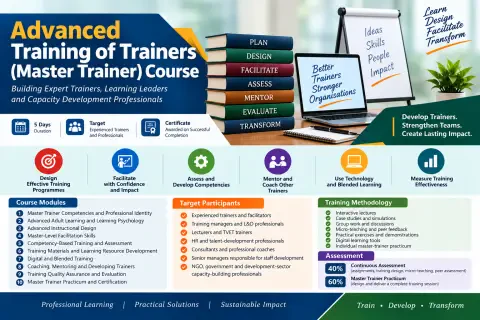
Learning Objectives
- Conduct learning analysis and define measurable outcomes
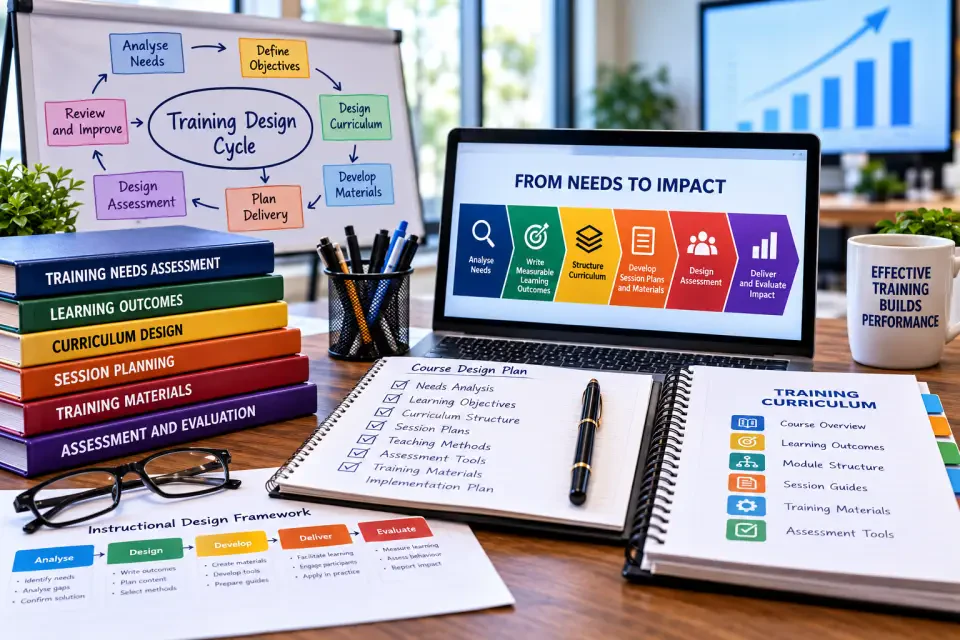
- Apply instructional design models such as ADDIE and backward design
- Structure curricula, modules and sessions that build logically
- Write facilitator guides, participant manuals and job aids
- Design assessments aligned to each learning outcome
- Select appropriate media and activities for each objective
- Design for blended and online delivery
- Pilot, review and improve a course using evidence
Course Content
- Adult learning principles applied to design
- ADDIE, SAM and backward design
- The cost of poor design
- Roles in a design team
- Design standards and documentation
- Learner and task analysis
- Separating training from non-training problems
- Writing measurable learning outcomes
- Bloom's taxonomy in practice
- Aligning outcomes to organisational goals
- Module sequencing and prerequisites
- Time allocation and pacing
- Balancing theory and practice
- Curriculum mapping documents
- Version control and updates
- Session plan formats
- Opening and closing techniques
- Choosing activities that match outcomes
- Case studies, simulations and role plays
- Timing and contingency planning
- Facilitator guides
- Participant manuals
- Slide design that supports learning
- Job aids and checklists
- Accessibility and plain language
- Formative and summative assessment
- Practical and competency-based assessment
- Rubrics and marking guides
- Feedback that improves performance
- Validity, reliability and fairness
- What works online and what does not
- Synchronous and asynchronous mixes
- E-learning storyboards
- Learning management system considerations
- Low-budget media production
- Running a pilot
- Collecting usable feedback
- Revision cycles
- Keeping content current
- Documenting changes
Who Should Attend?
- Trainers and facilitators who design their own materials
- Learning and development officers and curriculum developers
- TVET, college and university teaching staff
- NGO and government staff developing training packages
- Subject experts asked to turn their knowledge into a course
Training Methodology
- Design studio format, working on your own course all week
- Worked examples and reusable templates
- Peer critique sessions
- Short input sessions followed by hands-on practice
- Facilitator review of each participant's curriculum
Is this course for you?
Problems this course solves
- Courses built around what the expert knows rather than what the learner must do
- Objectives written so vaguely that nobody can test whether they were met
- Slide decks used as the curriculum, with no facilitator guide anyone else can deliver from
- Content that cannot be handed to another trainer without it falling apart
- Assessments that test memory instead of competence
Recommended prerequisites
- Some experience delivering or managing training, or subject expertise you need to turn into a course
- Bring a real course to design during the week, even if it is only an idea
- A laptop for the design work
This course is NOT designed for
- Those who only want to improve delivery and presentation; take a facilitation or ToT course instead
- Teams looking for e-learning software training on a specific authoring tool
- Anyone seeking a university qualification in curriculum studies
What's Included
Certification
Certificate in Instructional Design and Curriculum Development
Issued by: TRUSTGATE CORPORATE SKILLS
Frequently Asked Questions
How long is the Instructional Design and Curriculum Development Course training?
The Instructional Design and Curriculum Development Course runs for 5 Days. Each day combines expert-led teaching with practical, hands-on exercises so participants can apply what they learn immediately.
Is the Instructional Design and Curriculum Development Course delivered online or in-person?
This course is delivered in person (scheduled venues include Mombasa, Lusaka), live online, or in-house at your organisation.
How much does the Instructional Design and Curriculum Development Course cost?
The fee is US$600 per person online and US$1,400 per person in person. In-person fees depend on the participant's country; the pricing card on this page shows the fee for yours.
When is the next Instructional Design and Curriculum Development Course training?
A session is running now, from 23 November 2026 to 27 November 2026 in Rwanda. The next one runs from 1 December 2026 to 5 December 2026 in Mombasa, Kenya. You can also request a custom date or an in-house session for your team.
Do I get a certificate after completing the Instructional Design and Curriculum Development Course?
Yes. Participants who complete the Instructional Design and Curriculum Development Course receive a certificate of completion from TRUSTGATE CORPORATE SKILLS.
What will I learn in the Instructional Design and Curriculum Development Course?
Key learning outcomes include: Conduct learning analysis and define measurable outcomes; Apply instructional design models such as ADDIE and backward design; Structure curricula, modules and sessions that build logically; Write facilitator guides, participant manuals and job aids; Design assessments aligned to each learning outcome.