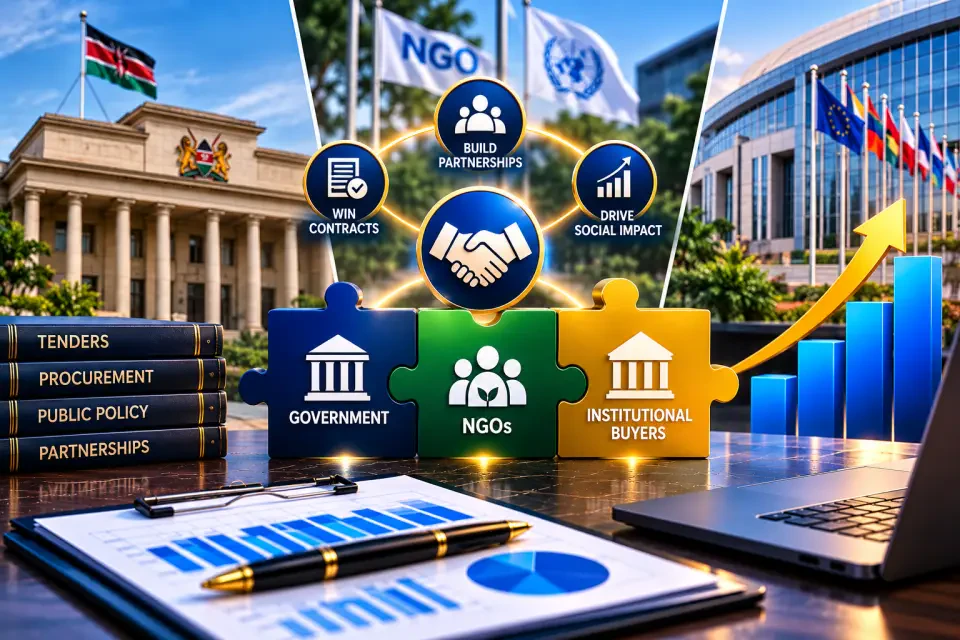
Strategic Selling to Government, NGOs & Institutional Buyers Executive Course
The Strategic Selling to Government, NGOs & Institutional Buyers Executive Course is a 10-day professional training programme delivered in-person or online in Marketing and Sales, ending with a TrustGate Corporate Skills certificate of completion.
The Strategic Selling to Government, NGOs & Institutional Buyers Programme is an advanced professional programme designed to equip sales professionals, business development managers, account managers, consultants and commercial leaders with the capabilities required to identif...
Last updated
Course Overview
Learning Objectives
- Understand the characteristics and dynamics of institutional buying markets.
- Identify government, NGO and institutional business opportunities systematically.
- Analyse institutional procurement structures and buying processes.
- Map institutional stakeholders and decision-making networks.
- Develop effective institutional account and market-development strategies.
- Evaluate opportunities and make informed bid/no-bid decisions.
- Develop competitive and compliant tender and proposal strategies.
- Prepare compelling technical and commercial value propositions.
- Engage procurement, technical and executive stakeholders professionally.
- Apply effective negotiation techniques within institutional procurement environments.
- Use CRM, tender intelligence and opportunity-tracking systems effectively.
- Build sustainable institutional relationships while maintaining professional and ethical standards.
Course Content
- Characteristics of government, NGO and institutional markets
- Strategic role of institutional sales in business growth
- Institutional market segmentation and prioritization
- Developing institutional sales strategies
- Government, NGO and institutional market structures
- Institutional funding, programmes and expenditure patterns
- Mapping institutional commercial ecosystems
- Identifying attractive institutional market segments
- Understanding institutional structures and mandates
- Market and organizational intelligence
- Identifying institutional needs and priorities
- Monitoring emerging institutional opportunities
- Institutional market research and intelligence sources
- Monitoring policies, programmes and strategic priorities
- Analysing institutional budgets and development plans
- Early identification of emerging opportunities
- Institutional procurement cycles and processes
- Budgeting, planning and procurement requirements
- Evaluation structures and decision-making processes
- Understanding procurement documentation and requirements
- Procurement compliance and supplier requirements
- Technical, financial and commercial evaluation
- Buyer evaluation criteria and scoring considerations
- Managing procurement information and submission requirements
- Identifying institutional decision-makers and influencers
- Procurement, technical, financial and executive stakeholders
- Stakeholder mapping and engagement strategies
- Building professional institutional relationships
- Stakeholder needs, interests and influence
- Building credibility and institutional trust
- Managing multiple stakeholders across complex buying structures
- Ethical influence and long-term relationship development
- Identifying institutional sales opportunities
- Opportunity qualification criteria
- Strategic bid/no-bid decision-making
- Competitive and resource-capacity assessment
- Opportunity attractiveness and strategic fit
- Competitor and incumbent supplier analysis
- Probability of winning and commercial potential
- Resource allocation and pursuit strategy
- Tender and proposal strategy
- Requirement’s analysis and compliance matrices
- Developing technical and commercial proposals
- Bid-team coordination and quality assurance
- Structuring persuasive institutional proposals
- Developing responsive technical methodologies
- Commercial pricing and proposal alignment
- Bid review, quality assurance and submission control
- Developing institutional value propositions
- Demonstrating technical and organizational capability
- Differentiation beyond price
- Evidence, references, performance and credibility
- Understanding institutional business and development problems
- Designing solutions around buyer priorities
- Quantifying organizational and customer value
- Demonstrating impact, outcomes and return on investment
- Negotiating with institutional buyers
- Managing price, scope and contractual considerations
- Responding to commercial and technical objections
- Maintaining value and professional relationships
- Multi-stakeholder negotiation dynamics
- Price, scope, risk and contractual negotiations
- Concession management and margin protection
- Managing difficult negotiations and commercial disputes
- Institutional opportunity pipelines
- CRM and account-management systems
- Tender tracking and sales forecasting
- Institutional sales KPIs and performance dashboards
- Pipeline health and opportunity progression
- Forecasting institutional sales and contract revenues
- Conversion, win-rate and sales-cycle analysis
- Revenue dashboards and management reporting
- Strategic institutional account planning
- Customer retention and contract-development strategies
- Identifying future institutional opportunities
- Building long-term institutional partnerships
- Account expansion and relationship development
- Cross-selling, up-selling and new opportunity development
- Institutional customer lifetime value and profitability
- Building a sustainable institutional revenue-growth model
Who Should Attend?
- Business Development Managers
- Sales Managers
- Sales Executives
- Commercial Managers
- Key Account Managers
- Strategic Account Managers
- Tender and Bid Managers
- Proposal Managers
- Business Development Executives
- Government Relations Professionals
- Institutional Sales Professionals
- Corporate Affairs Professionals
- Consultants
- Professional Service Providers
- Entrepreneurs and business owners
- Suppliers to government and NGOs
- Contractors and service providers
- Organizations seeking institutional contracts
Training Methodology
- Facilitator-Led Executive Sessions
- Institutional Sales Case Studies
- Opportunity Identification Exercises
- Stakeholder Mapping Workshops
- Tender Strategy Simulations
- Bid/No-Bid Exercises
- Proposal Development Workshops
- Negotiation Simulations
- Group Problem-Solving
- Practical Institutional Sales Planning
Your facilitator

Mr Isaac Gachomo Wamwago
Isaac has served as a trainer and facilitator with various professional training and development institutions, delivering programmes
View full profileIs this course for you?
Problems this course solves
- Poor Understanding of Institutional Buying Processes: The programme addresses this through: institutional buying analysis, procurement-process mapping and stakeholder-management techniques.
- Pursuing Opportunities Without Adequate Qualification: The programme addresses this through: opportunity qualification, bid/no-bid frameworks and institutional opportunity assessment.
- Weak Tender and Proposal Competitiveness: The programme addresses this through: proposal strategy, requirements analysis, value propositions, bid positioning and proposal-quality management.
- Difficulty Building Sustainable Institutional Relationships: The programme addresses this through: account planning, stakeholder mapping, relationship management, customer intelligence and institutional account development.
What's Included
Certification
Certificate in Strategic Selling to Government, NGOs & Institutional Buyers
Issued by: TRUSTGATE CORPORATE SKILLS
Frequently Asked Questions
How long is the Strategic Selling to Government, NGOs & Institutional Buyers Executive Course training?
The Strategic Selling to Government, NGOs & Institutional Buyers Executive Course runs for 10 Days. Each day combines expert-led teaching with practical, hands-on exercises so participants can apply what they learn immediately.
Is the Strategic Selling to Government, NGOs & Institutional Buyers Executive Course delivered online or in-person?
This course is delivered in person (scheduled venues include Mombasa, Nairobi, Kigali, Lusaka), live online, or in-house at your organisation.
How much does the Strategic Selling to Government, NGOs & Institutional Buyers Executive Course cost?
The fee is US$1,200 per person online and US$2,800 per person in person. In-person fees depend on the participant's country; the pricing card on this page shows the fee for yours.
When is the next Strategic Selling to Government, NGOs & Institutional Buyers Executive Course training?
A session is running now, from 16 November 2026 to 27 November 2026 in Mombasa, Kenya. The next one runs from 30 November 2026 to 11 December 2026 in Kigali, Rwanda. You can also request a custom date or an in-house session for your team.
Do I get a certificate after completing the Strategic Selling to Government, NGOs & Institutional Buyers Executive Course?
Yes. Participants who complete the Strategic Selling to Government, NGOs & Institutional Buyers Executive Course receive a certificate of completion from TRUSTGATE CORPORATE SKILLS.
What will I learn in the Strategic Selling to Government, NGOs & Institutional Buyers Executive Course?
Key learning outcomes include: Understand the characteristics and dynamics of institutional buying markets; Identify government, NGO and institutional business opportunities systematically; Analyse institutional procurement structures and buying processes; Map institutional stakeholders and decision-making networks; Develop effective institutional account and market-development strategies.